Global Migration Film Festival 2025 in Tijuana Marks International Migrants Day Through Film and Dialogue
On December 18, the Global Migration Film Festival (GMFF) brought stories of movement, belonging, and connection to Tijuana (México), creating a shared space for reflection through cinema on International Migrants Day.
Organized by the International Organization for Migration (IOM) in Mexico, with the participation of USA for IOM, the special screening in Tijuana gathered community members, cultural leaders, civil society organizations, and government representatives for an evening centered on storytelling, dialogue, and collaboration. Through film and panel discussions, the event highlighted how art and culture can open doors to understanding, to new perspectives on the challenges and complexities of migration, and strengthen connections across sectors and communities.
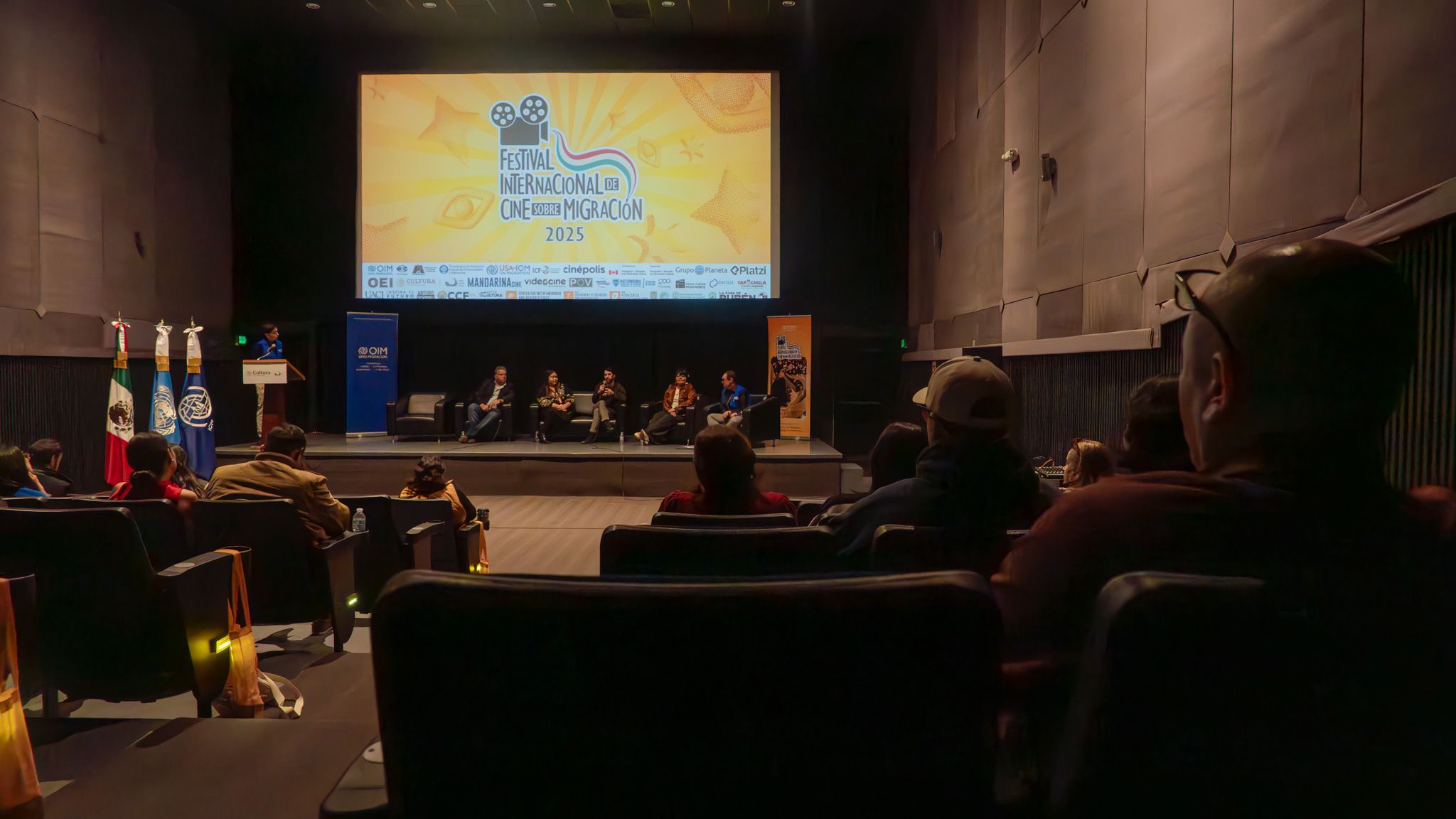
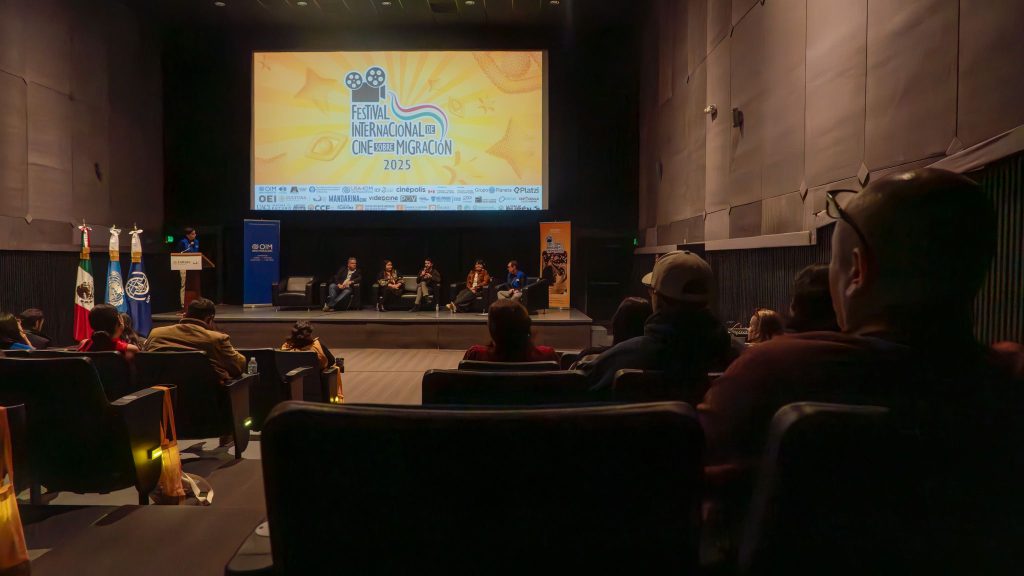
The panel and special GMFF screening on December 18, held as part of the Global Migration Film Festival in Mexico at the Cineteca Carlos Monsiváis del Centro Cultural Tijuana (CECUT). Photo: IOM/ Karla Garcia, 2025.
The Power of Storytelling
For USA for IOM, participation in the Global Migration Film Festival reflects a longstanding commitment to storytelling as a way to inspire connection and action. Events like GMFF offer a powerful platform to bring people together around lived experiences, to raise awareness and build partnerships.
Representing USA for IOM at the event, Luciano Arroio, Operations Officer, spoke about the importance of cultural spaces that invite dialogue and collaboration.
“The Global Migration Film Festival creates a unique space where stories bring people together,” Arroio said. “GMFF Mexico demonstrates how partnerships across culture, civil society, and international cooperation can spark meaningful conversations and strengthen the connections that help communities move forward together.”
An Evening at CECUT
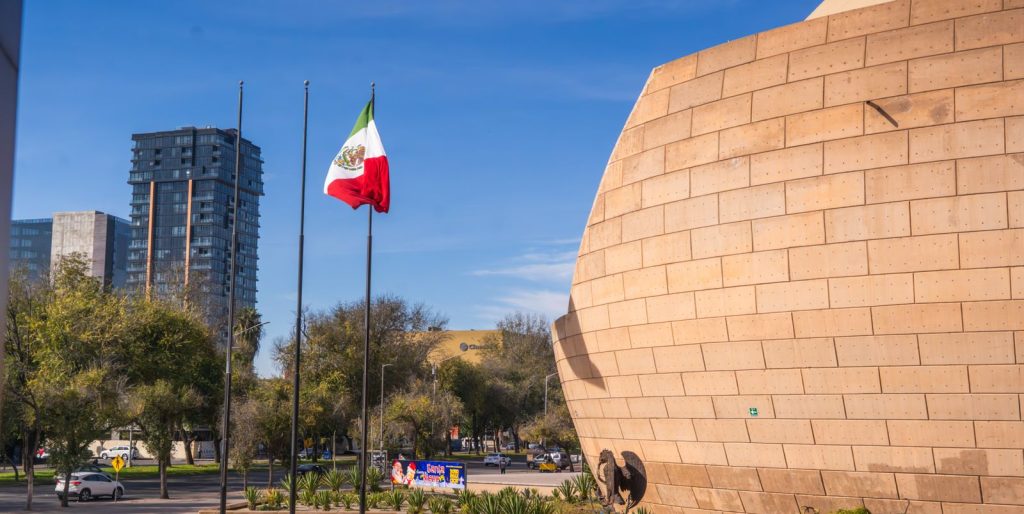
The event was hosted at the Cineteca Carlos Monsiváis del Centro Cultural Tijuana (CECUT), one of the city’s most recognized cultural institutions. The setting itself—both welcoming and symbolic—underscored the role of arts and culture in creating spaces for dialogue and community engagement.
Centro Cultural Tijuana (CECUT).
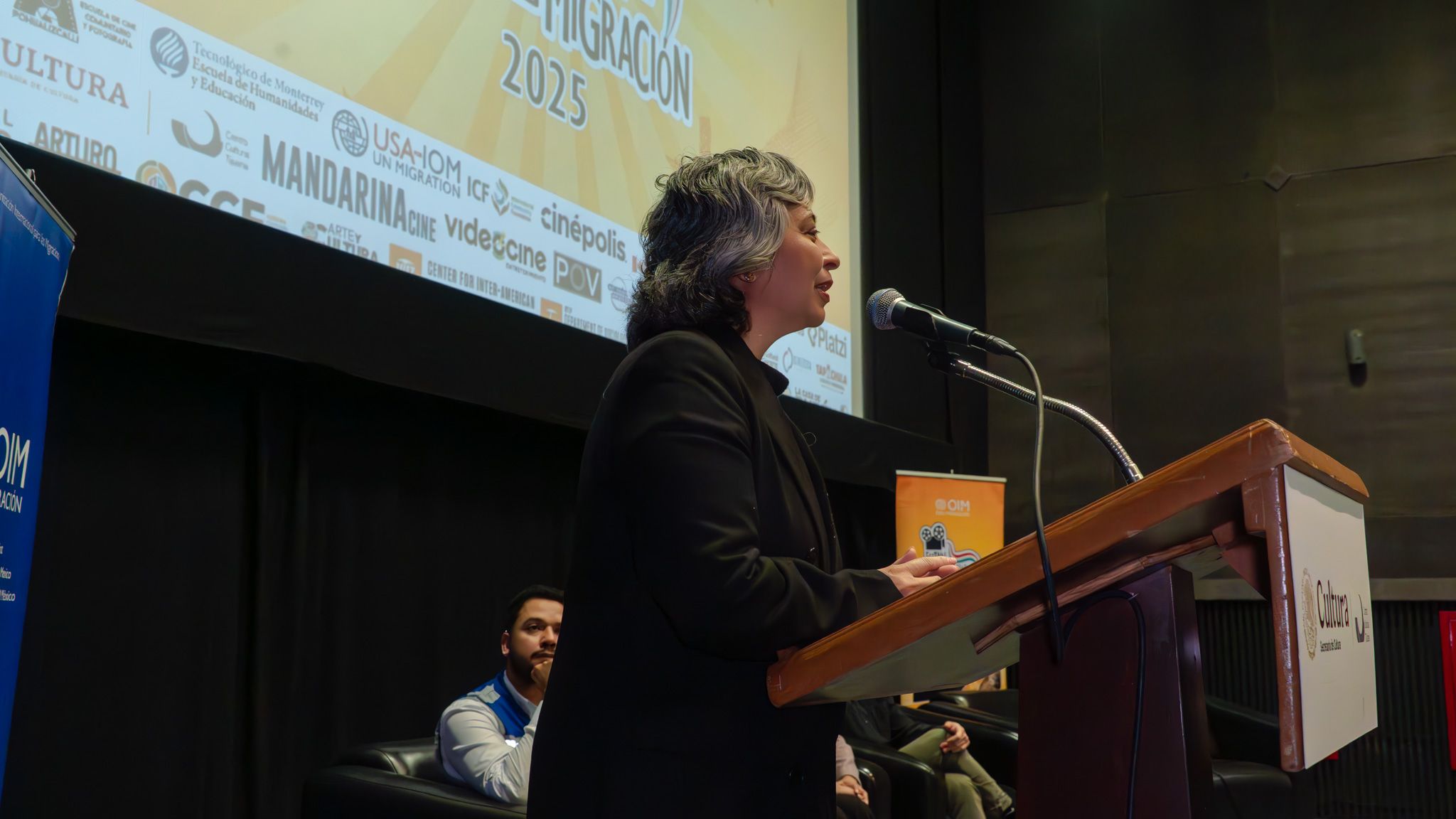
The evening opened with welcoming remarks from Mtra. Miriam García Aguirre, Director of the Centro Cultural Tijuana, who emphasized the importance of cultural venues in fostering reflection, inclusion, and shared understanding through artistic expression.
Mtra. Miriam García Aguirre, Director of the Centro Cultural Tijuana (CECUT), and Elena Anguiano, from the Undersecretariat for Attention to Priority Groups of the General Secretariat of Government of Baja California, deliver welcoming remarks at the opening of the GMFF in Tijuana.Photo: IOM/ Karla Garcia, 2025.
Films That Spark Reflection
The audience was first introduced to a selection of Cineminutos, short films created by young filmmakers as part of a national competition organized by IOM Mexico, and sponsored by Grupo Planeta, TEC de Monterrey/Puebla Campus, Photography and Cinema Community School Pohualizcalli, and Mexico’s Film Training Center (CCC). These brief works offered creative, thoughtful perspectives on themes of integration, identity, belonging, and community, adding emotional depth and energy to the program.
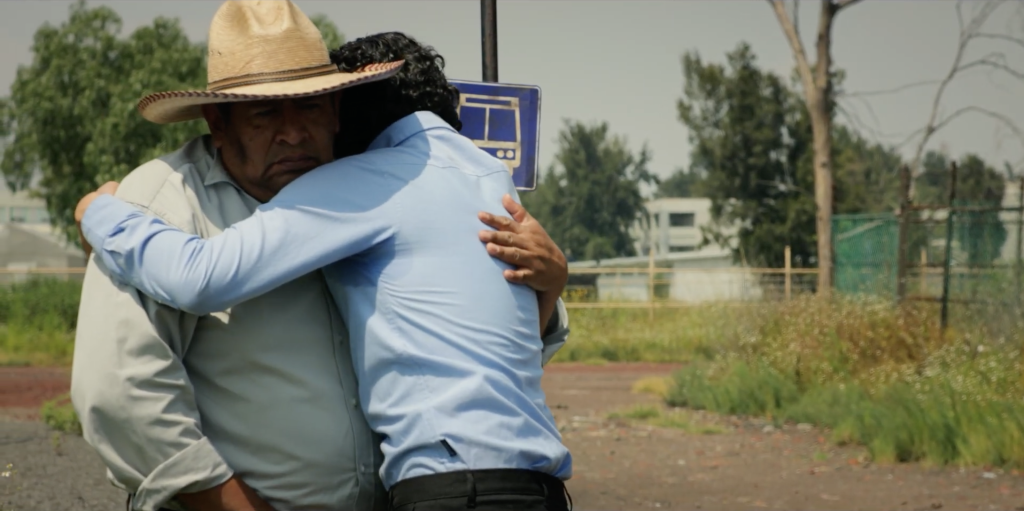
‘Pride’, one of the winning videos of the Cineminutos competition, where 37 teams participated in two categories, documentary and fiction, and the top three winners from each category had the opportunity to showcase their work before all the screenings at the festival.
The screening continued with the exclusive presentation of La Raya by Oaxacan director Yolanda Cruz. The film—shared with this audience ahead of its public release—was met with a strong and emotional response. Blending realism with subtle elements of magical storytelling, La Raya explores uncertainty, hope, and the quiet moments that shape personal journeys. Its intimate tone resonated deeply with viewers and set the stage for thoughtful discussion.
La Raya touches on a theme that affects many indigenous communities in the region: the migration of young people and working-age individuals seeking better opportunities, but who also pay the price of leaving behind their language, traditions, parents, and often their children.
Conversation and Connection
A panel discussion invited participants to reflect on the themes raised by the films and to consider how collaboration across sectors can support inclusion, social and community cohesion. Panelists included Elena Anguiano (SAGP), representatives from Centro 32, David Flores from the Entrepreneurship Institute,María José Juárez, from the State Government of Baja California,Alberto Cabezas, Communication Coordinator of IOM Mexico, and USA for IOM participants.
The conversation emphasized the value of working together—across institutions and disciplines—to create environments where stories are heard and connections are strengthened.
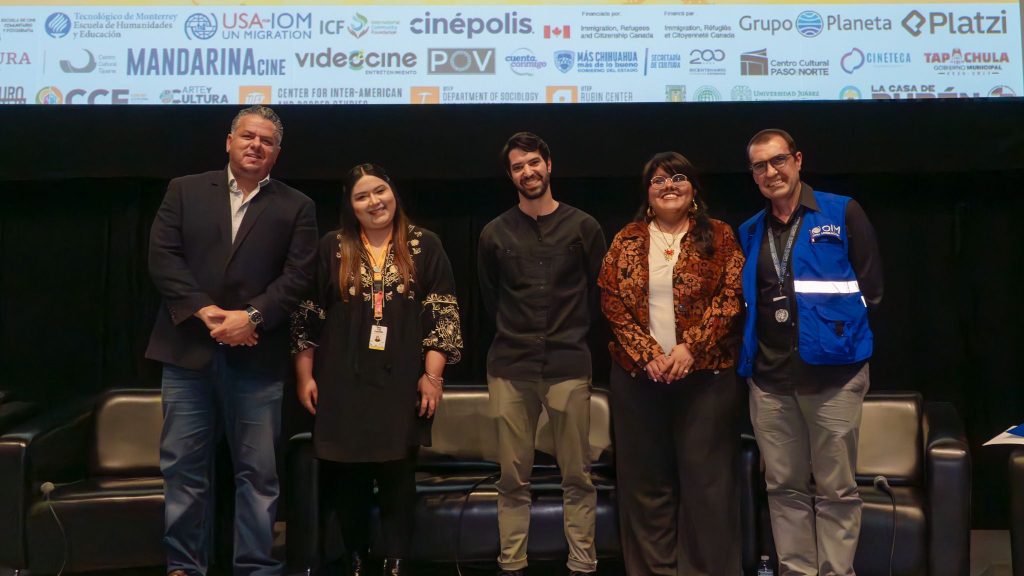
Panelists gather on stage following the screening at GMFF Tijuana to discuss migrant integration in Mexico and cross-sector collaboration. The panel brought together voices from government, civil society, entrepreneurship, and international cooperation to explore how partnerships can support migrants and host communities alike. Photo: IOM/ Karla Garcia, 2025.
A Festival with Local Impact
The Tijuana screening formed part of the eighth edition of the Global Migration Film Festival in Mexico, which took place from November 20 to December 18, 2025. Since its launch in Mexico in 2017, GMFF has reached thousands of people across cities throughout the country, using cinema to foster empathy, challenge stereotypes, and celebrate human stories.
Since launching the Global Migration Film Festival in 2016, IOM has used the power of film to foster empathy, deepen understanding of migration, and create safe spaces for dialogue around the promises and challenges migrants face.
In Tijuana, the festival’s closing event offered a moment to pause, reflect, and connect—bringing people together not only to watch films, but to listen, exchange ideas, and imagine what shared futures can look like.
The Global Migration Film Festival and Tijuana edition was made possible thanks to dedication of IOM Mexico and the collaboration and support of partners committed to fostering dialogue and community through culture.
As the evening concluded at CECUT, the atmosphere remained warm and reflective. Through film and dialogue, GMFF Tijuana reminded attendees that stories—when shared openly and creatively—have the power to bring communities closer and inspire continued collaboration.
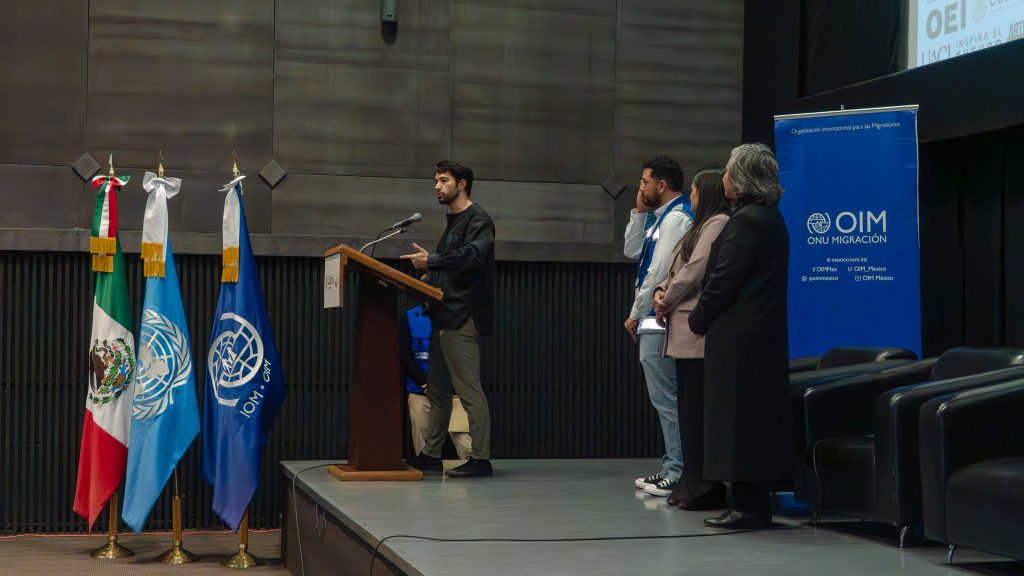
Opening remarks at the Global Migration Film Festival 2025 in Tijuana highlighting the role of culture and cinema in fostering understanding, inclusion, and migrant integration.Photo: IOM/ Karla Garcia, 2025.
Youth film The Other Planet receives USA for IOM recognition in PLURAL+ competition
The film The Other Planet, developed by a group of 10 children in Belgium, received the USA for IOM recognition as part ofthe PLURAL+ Youth Video Festival on Migration, Diversity & Social Inclusion.The five-minute film tells thetouchingstory of extraterrestrials – a mother and daughter –displaced byan attack on their Red Planet, who make their way to the Blue Planet, and their first awkward and then accepting interactions with residents.
The Other Planet film poster. Credit: Camera-etc.
“We had the chance to make a short film and we learned so many things about animation cinema and about why people sometimes have to leave their country. I think this movie is going to help us to be more open and understanding with other people,” said Binta, 11 years old.
The 6th grade students, aged 11-12 years old from Morchamps Municipal Primary School in Seraing, Liège Province, Belgium, used cut out technique to create the characters, sets and animation, developed the script, and recorded their own voices for audio.
Photos of the children working on developing The Other Planet film.
The film is produced by Camera-etc, an animation studio and creativity center from the Walloon-Brussels Community that produces art films, offering workshops to create animation shorts with the help of professionals. Camera-etc partnered with CRIPEL, the Liège Regional Centre for Integrating Persons of Immigrant Origin in Belgium, to carry out a project on the theme of racism. The Other Planet is used by CRIPEL as an awareness tool among young audiences.
“Since 1979, we have met thousands of young filmmakers during our animation workshop. Children and teenagers have a lot of ideas and we invite them to express themselves through animation. Making an animated short is a real team work with a lot of learnings, fun and creativity,” said Bastien Martin, producer from Camera-etc.
“We thank PLURAL+ and all the mentors for this recognition, it’s an honor to be part of this festival with our short films. And most of all, congratulations to the young filmmakers of The Other Planet !”
USA for IOM recognizedThe Other Planetfor the film’s thoughtful portrayal of the situation and challenges faced by displaced people, and realizes the film’s potential for awareness raising. With congratulations to the10 children: Adam, Berfin, Binta, Aaron, Naïla, Luca, Younes, Salif, Shanysse, Flavie, and to Delphine Hermans and Siona Vidakovic for their direction.
About PLURAL+
The primary goal of the PLURAL+ Youth Video Festival is to support the creative vision of young people and the global distribution of youth-produced media on themes related to migration, diversity, social inclusion, and the prevention of xenophobia in order to foster respect for cultural diversity. Launched in 2009, PLURAL+ is a joint initiative of the United Nations Alliance of Civilizations (UNAOC) and the International Organization for Migration (IOM), with a network of more than 50 partner organizations around the globe.
Global Migration Film Festival opens at IOM Mexico
Speakers at the opening of the GMFF in Mexico City, November 7, 2024.
The opening event of the 2024 Global Migration Film Festival (GMFF), hosted by IOM Mexico, was held in Mexico City last week, attended by local representatives, private sector partners, and community members.
The feature film, A Million Miles Away highlighted the story of Jose Hernandez, who through determination from a young age as a Mexican American farm worker, fulfilled his dream to become a NASA Astronaut.
The film’s Director Alejandra Marquez Abella spoke on a panel on the impact of migrant talent contributing to the development of communities of destination and origin.
“It was very important for me to see one of the interviews Jose Hernandez gave from the ship. He said, ‘From space you can’t see borders’,” said Alejandra Marquez Abella. “That phrase inspired me to shoot the film.”
The GMFF in Mexico is supported by 25 entities: universities; government partners; private sector; and film, cultural and development organizations.
“Film plays an important role in USA for IOM’s mission. Through the stories presented at GMFF, we reach a diverse audience—ranging from the general public to key players in the private sector, as well as institutions and, of course, migrants themselves. These films allow us to see the reality migrants face on a daily basis, they’re challenges and resilience, not merely as numbers or data, but as individuals with their own stories—stories that could very well be our own,” said Luciano Arroio, Interim CEO of USA for IOM.
Multiple speakers highlighted the contributions of migrants to innovation, arts and sciences, successful companies, and work force dynamism.
“With this event begins the seventh edition of this festival in Mexico in which we want to bring you closer to extraordinary, inspiring and necessary stories to help us understand that those who migrate are not a threat, but that they make significant contributions to the communities that welcome them,” said Dana Graber Ladek, IOM Mexico Chief of Mission.
Dana Graber Ladek, Chief of Mission, IOM Mexico, and Luciano Arroio, Interim CEO, USA for IOM.
The GMFF in Mexico highlights films that share the unique contributions that migrants make to their host communities. Launched by IOM, the GMFF began in 2016 and has been held in more than 100 countries around the world. Films bring the stories of migrants to diverse audiences, with the aim to create space for respectful discussion and engagement.
A total of 25 film screenings on various migration experiences will be take place from November 7 to 28, across nine cities, including Tijuana, Ciudad Juárez, Mexicali, Monterrey, Guadalajara, Villahermosa, Tapachula, to be hosted in in shelters, cultural and university spaces, AVES Community Centers and theaters. The functions are completely free.
As in 2023, a special function will again take place in El Paso, Texas, USA at the Rubin Center, located in the University of Texas (UTEP), United States on November 21.